History and Affiliations
History: 80 years representing the nerds who create the birds
The first meeting of the Seattle Professional Engineering Employees Association was held on March 6, 1944. About 50 Boeing Co. engineers took part, and 10 were appointed to a committee that drew up draft bylaws that were the foundation of the governing documents of SPEEA today.
There was a surge in union activity in America toward the end of World War II, and there was a scramble among unions vying for the right to represent engineers at Boeing, with both the International Association of Machinists and the International Brotherhood of Teamsters attempting organizing drives.
But by the end of 1945, a majority of Boeing’s design engineers had signed petitions designating SPEEA as their collective bargaining representative, and on May 8, 1946, the National Labor Relations Board reported that 81% of engineers had voted to create SPEEA to be their union.
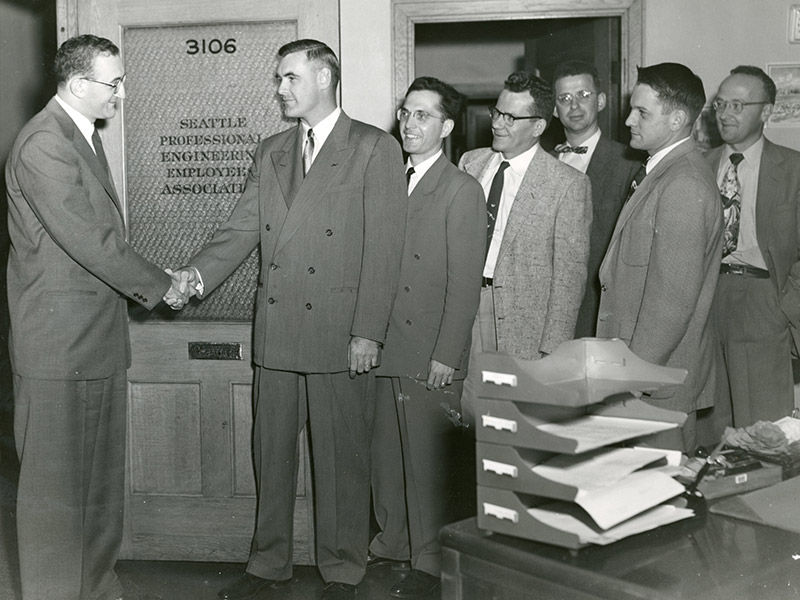
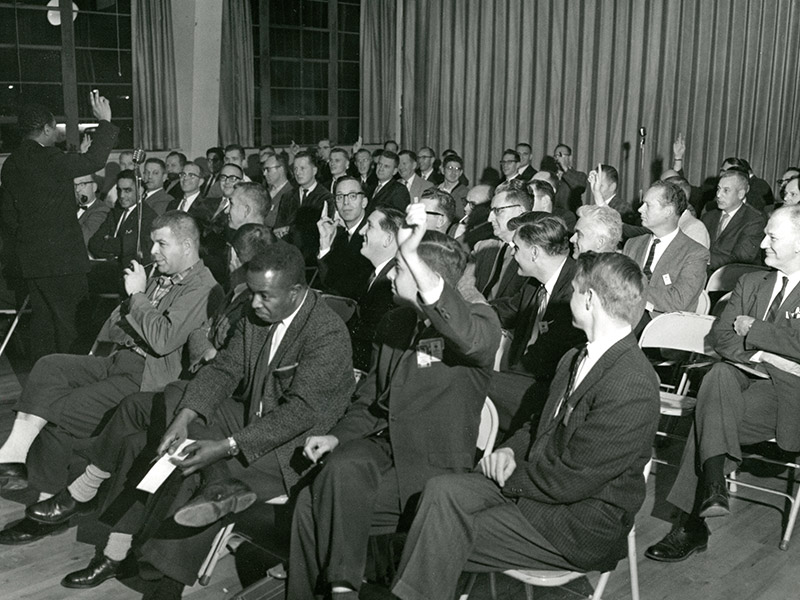
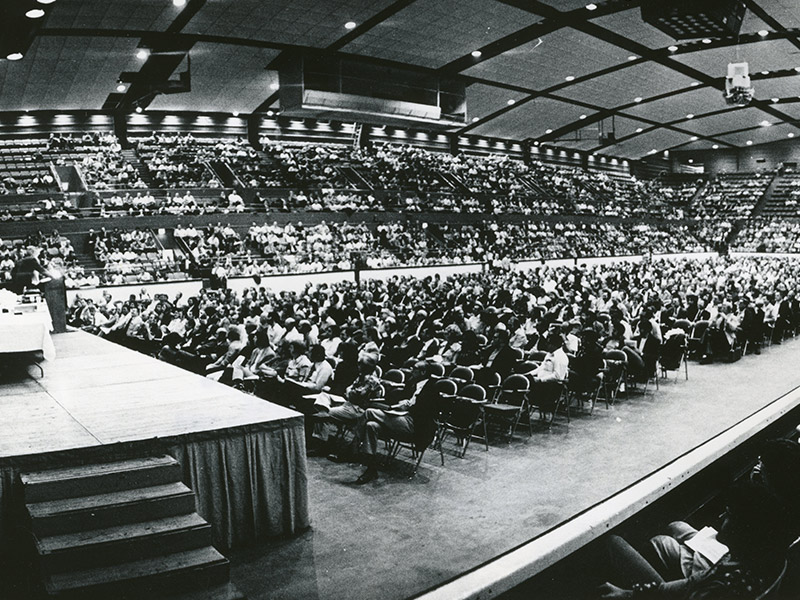
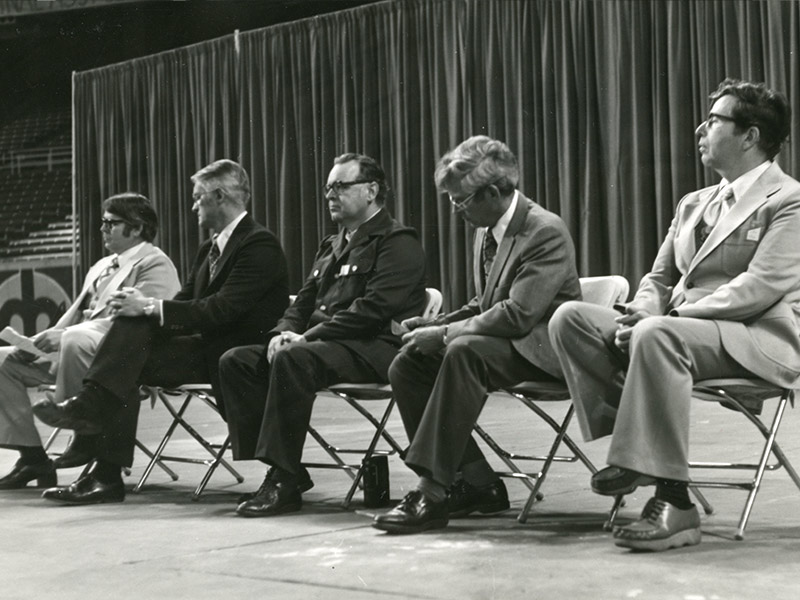
The original core group of aircraft designers was joined by tooling engineers at Boeing in October 1946, and then chemists in 1948. Over the next five decades, more than a dozen groups of Boeing aerospace professionals were to join SPEEA, including the Puget Sound technical workers in 1971.
One of the early leaders of SPEEA was T.A. Wilson, who joined the then-new union in 1948, and was elected to the union’s Executive Board. Wilson was promoted into a management role in 1951, leading to his resignation from the union; he went on to become Boeing’s president in 1968, and retired as president and CEO in 1986.
Alan Mullaly, who went on to become CEO of both Boeing Commercial Airplanes and Ford Motor Co., also started his professional career as a dues-paying SPEEA engineer at Boeing.
Some key moments of our union’s history
- 1949 – SPEEA’s negotiating team rejected a Boeing contract offer. Miffed, Boeing management petitioned the NLRB for an election to determine whether SPEEA’s leadership actually represented its members; 83% of those voting said yes, and negotiations resumed.
- 1971 – Boeing technical workers joined their engineering colleagues as part of SPEEA, with their own bargaining unit.
- 1974 – SPEEA membership climbed past 10,000 for the first time.
- 1981 – Technical workers at Boeing in Portland, Oregon, joined SPEEA.
- 1987 – Engineers at Boeing in Portland, Oregon, joined SPEEA.
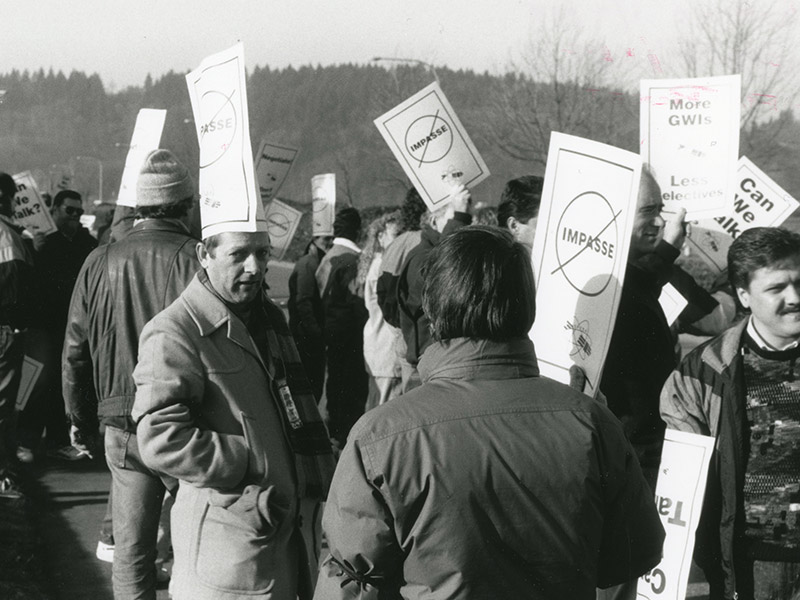
- 1993 – SPEEA members stage a one-day strike against Boeing during contract talks; later negotiation led to the creation of the current retention rating system for layoffs
- 1995 – Engineers with Boeing in Wichita join SPEEA.
- 1995 – SPEEA negotiated with Boeing to launch Ed Wells Partnership, a joint initiative to enhance technical excellences through technical training and professional development.
- 1999 – SPEEA members vote to change the union’s name to “Society of Professional Engineering Employees in Aerospace” and to affiliate with the International Federation of Professional & Technical Engineers as IFPTE Local 2001.
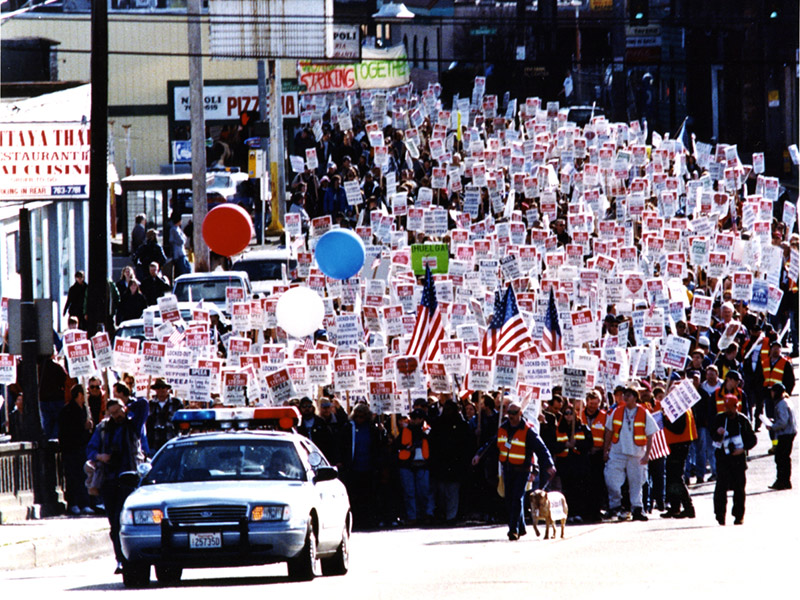
- 2000 – SPEEA Prof and Tech members in multiple states went on strike at Boeing for 40 days and won contract gains during what was (at the time) the largest white-collar strike in U.S. history; separately, Wichita technical workers joined SPEEA.
- 2005 – Boeing sells its Wichita business unit, which becomes Spirit AeroSystems; SPEEA continues to represent both engineers and technical and professional employees.
- 2011 – Boeing instructor pilots join SPEEA.
- 2012 – Boeing Safety, Technical, Standards and Simulator Instructors joined SPEEA, combining with instructor pilots to form what’s now called the SPEEA Pilot Instructors Unit.
- 2021 – SPEEA was awarded state grant money to stand up SPEEA Aerospace Career Enhancement (ACE) to promote, expand and enhance workforce training and education in support of the aerospace industry and supply chain in the state of Washington.
- 2022 – SPEEA members approve a Constitutional Referendum allowing for organization of workers at companies that weren’t originally parts of Boeing.
- 2025 – Boeing buys back Wichita business unit; SPEEA continues to represent both engineers and technical and professional employees.
- 2026 – Wichita Technical and Professional Unit (WTPU) members vote to ratify contract
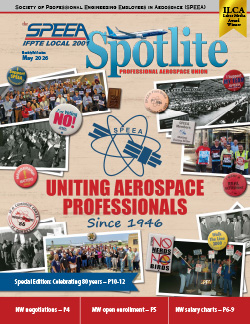
Read the special article in the May 2026 Spotlite
Affiliations
The International Federation of Professional and Technical Engineers (IFPTE) is SPEEA’s parent organization.
Based in Washington, D.C., IFPTE now represents some 90,000 people working in professional, technical, administrative and allied occupations across the United States and Canada. Members work for three broad categories of employers - federal sector, public sector and private sector.
IFPTE members work in a wide range of professions, as engineers, scientists, technicians, health-care professionals, economists, judges, architects and accountants.
The union was formed in 1918 as the International Federation of Draftsmen’s Unions, a craft union for shipyard engineers and draftsmen. In 1919, its charter was expanded to include engineers, architects and other professionals.

How IFPTE is run
Unlike some labor unions, in which decision-making is centralized at international headquarters, IFPTE is organized to give its member-driven local affiliates greater autonomy and flexibility, with the international headquarters staff serving in support roles, assisting locals with bargaining, training, research and legislative advocacy.
The IFPTE is run by an Executive Council, which includes two full-time officers – a President and Secretary-Treasurer – and 15 area vice-presidents. SPEEA members vote to nominate three of those area vice-presidents on the Executive Council – two representing members in the Northwest and one in the Midwest. Those nominees are formally elected by delegates to the IFPTE Convention, which is held every three years.
During their three-year terms, the IFPTE area vice-presidents meet twice a year to review spending, hear reports and set policy.
SPEEA affiliated with IFPTE in 1999
In 1999, 80% of SPEEA members voted in favor of affiliating with the IFPTE as Local 2001.
The vote came just prior to the contentious contract talks with Boeing that resulted in our 40-day strike in the winter of 2000.
Labor historians say the vote of SPEEA members to affiliate with the IFPTE was an important step in SPEEA’s journey from its roots as a loose-knit professional association to a full-fledged labor union.
Connections to broader labor movement
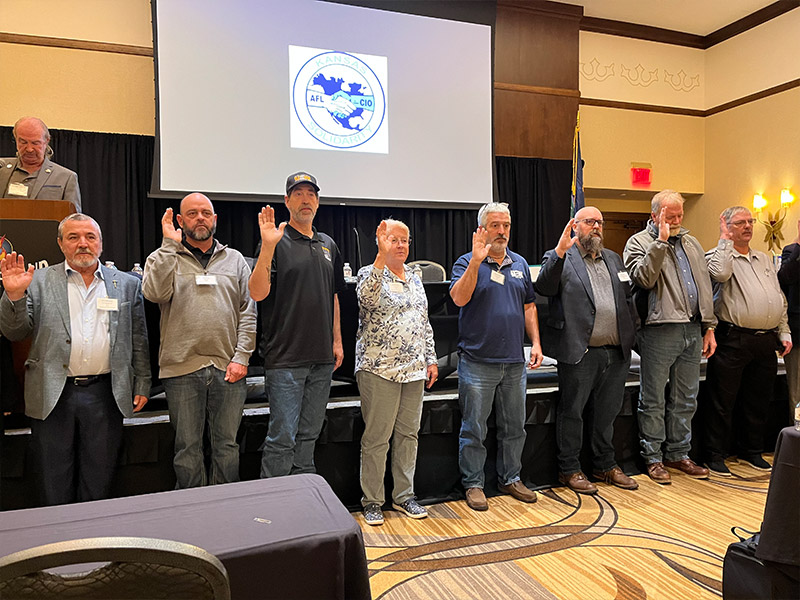
Through our affiliation with the IFPTE, SPEEA is a part of both the American Federation of Labor-Congress of Industrial Organizations (commonly known as the AFL-CIO) and of the Canadian Labour Congress.
As a result, SPEEA stands with those groups who speak on behalf of all working people in North America.
The AFL-CIO is a federation of 61 unions representing more than 15 million working Americans. The Canadian Labour Congress is a federation of 51 union representing some 3.3 million Canadian workers.
In addition, SPEEA is affiliated at a state level with the Washington State Labor Council and the Oregon AFL-CIO, two statewide labor federations that help coordinate statewide activities and support for working people.
SPEEA also sends delegates to local labor councils: the Wichita-Hutchinson Labor Federation in Kansas; the Northwest Oregon Labor Council; and the King, Pierce and Snohomish-Island County labor councils in Washington. These local labor groups provide local-level support for working people.